1. The Visual Brain
Traditional retail signage relies heavily on text. However, the human brain is hardwired for visuals. Research indicates a massive disparity in processing speed and retention between image-based content and text-based descriptions.
Visuals are processed 60k times faster than text by the human brain.
Information Retention Rates: 3 Days Later
Source: Aggregate Cognitive Psychology Studies
2. The "Stories" Takeover
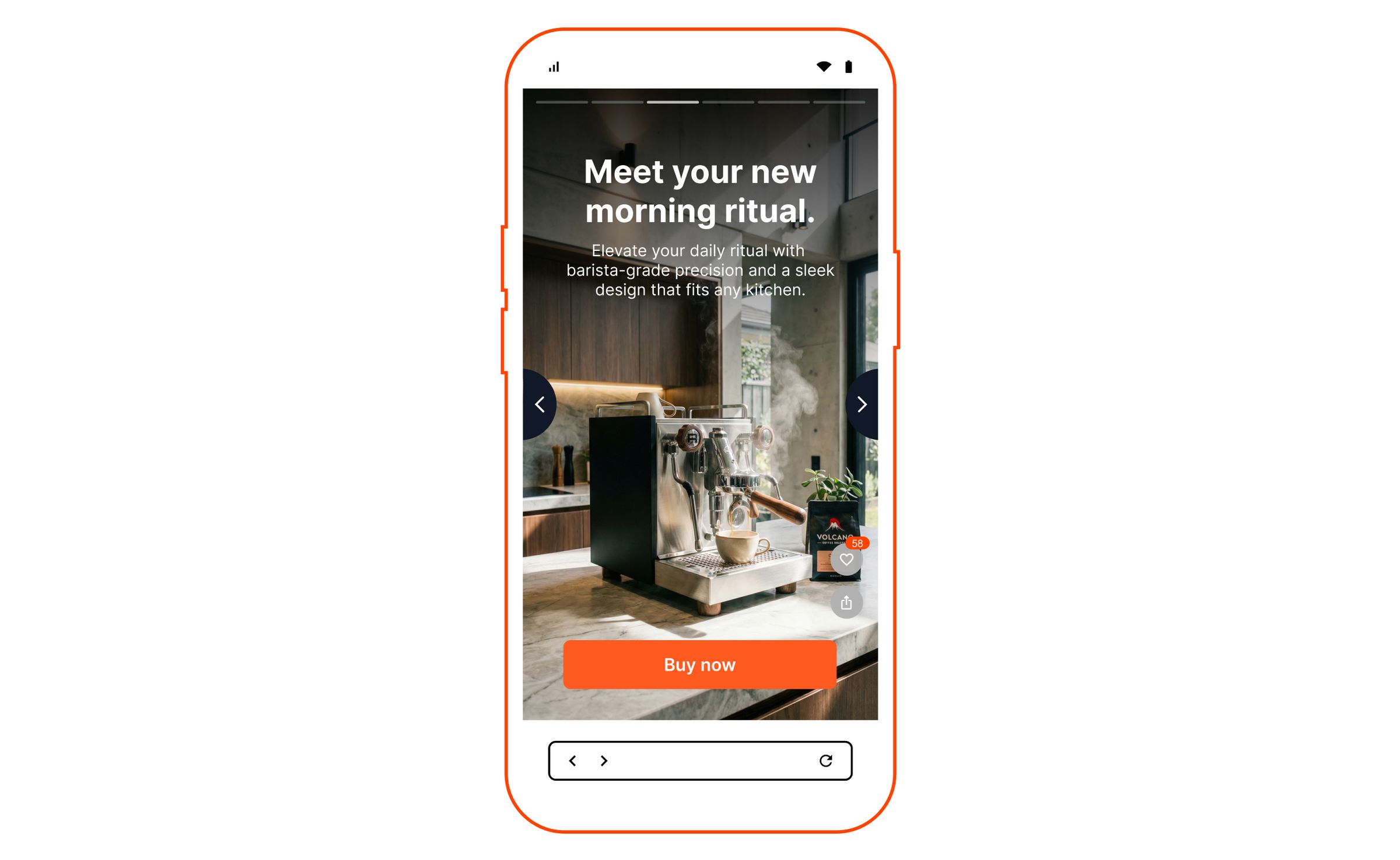
The "Stories" format (ephemeral, vertical, tap-to-advance) has eclipsed the traditional "Feed" scroll. It is now the primary way consumers under 40 digest new information.
Why the UI Wins
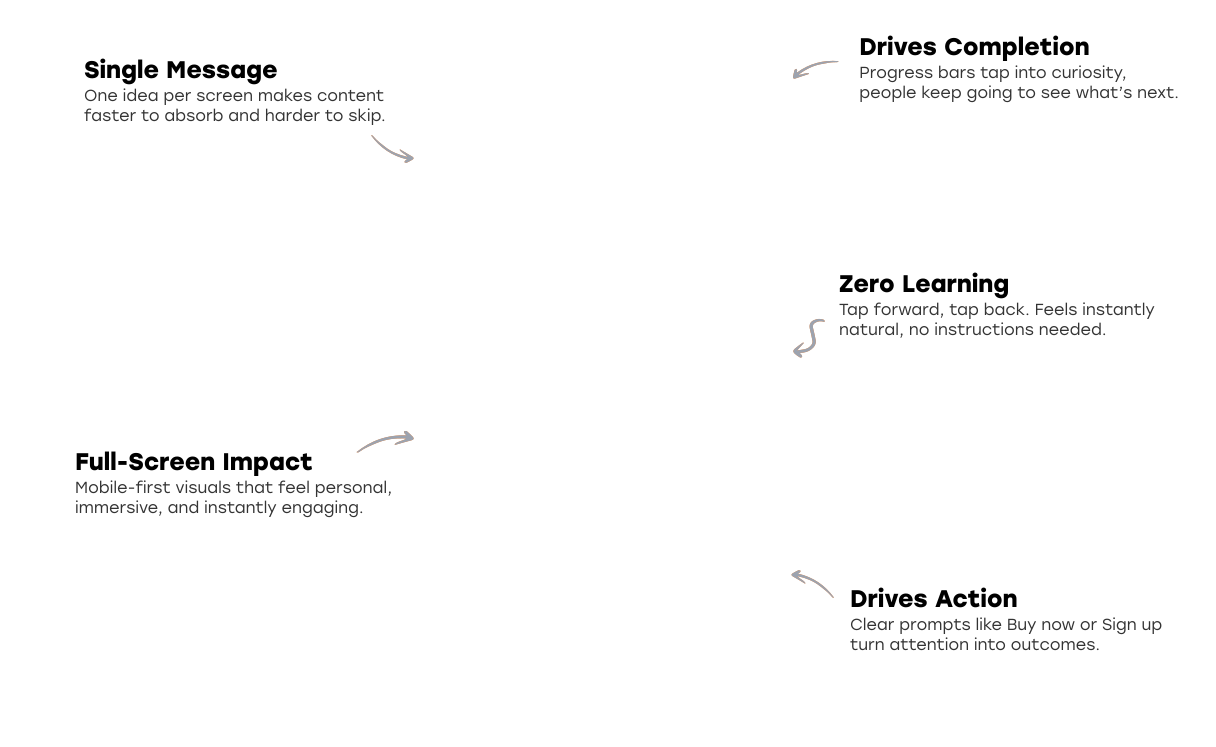
Comparing the "Stories" interface against standard Digital Signage (looping videos) reveals why the interactive, chapter-based model performs better for engagement.
3. The "Chapter" Effect
Why breaking content into bite-sized "chapters" (1 benefit per screen) dramatically improves completion rates compared to continuous video.
*Continuous Video sees linear drop-off. Chaptered content resets attention at each "tap" or transition.
The Optimal Shelf-Edge Narrative
4. Impact at the Point of Sale
Digital, story-style displays at the shelf edge don't just look good—they drive specific types of consumer behaviors.
Uplift by Metric
Consumer Preference: "Would this help you buy?"
Conclusion
The data suggests that the "Stories" interface is not just a social media trend, but a superior information delivery system for the modern attention span. Bringing this UI to the physical shelf edge aligns with cognitive preference (visuals), behavioral habits (tapping/chapters), and conversion drivers (social proof).